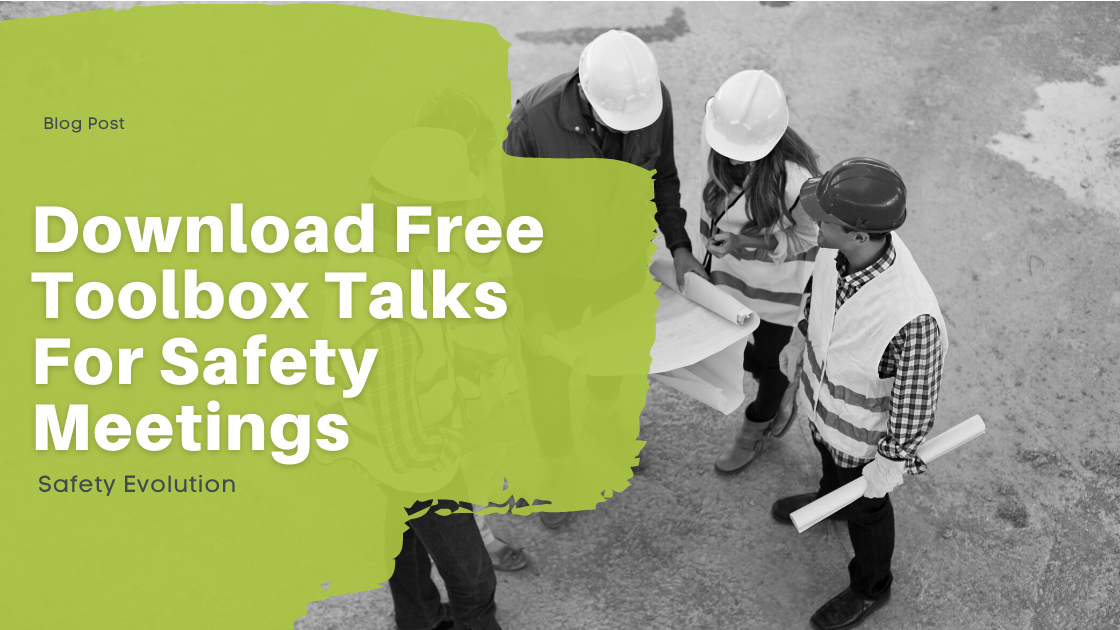
Safety doesn’t happen by accident. Neither does engagement during routine site meetings. Yet every day, supervisors across construction, manufacturing, and maintenance struggle to deliver meaningful safety discussions—often resorting to generic warnings, last-minute improvisation, or skipping the session altogether. That’s where downloadable free toolbox talks come in. They’re not just time-savers—they’re force multipliers for safety culture when used right.
These short, focused discussions aim to reinforce safe behaviors, highlight risks in current tasks, and keep compliance top of mind. But finding reliable, well-structured, and immediately usable content isn’t easy. Many free resources online are outdated, poorly formatted, or irrelevant to real-world conditions. The goal isn’t just to download free toolbox talks—it’s to download ones that actually work.
Let’s break down what makes a toolbox talk effective, where to find high-quality free versions, and how to integrate them into your workflow without turning safety into a checkbox exercise.
What Are Toolbox Talks (and Why They Matter)
Toolbox talks are brief, informal safety meetings typically held at the start of a shift or before a specific high-risk task. They last 10 to 15 minutes and focus on one specific hazard—like fall protection, lockout/tagout, or proper PPE use.
Unlike full training modules, they’re not designed to teach new skills from scratch. Instead, they reinforce awareness, encourage discussion, and remind workers of best practices in context.
Why they work:
- They’re timely: Delivered when hazards are relevant to the day’s work
- They’re participatory: Workers share experiences, increasing buy-in
- They’re documented: Many include sign-in sheets for compliance
When done well, these talks reduce incidents. When done poorly, they become background noise.
Common mistakes:
- Repeating the same topics monthly with no variation
- Reading verbatim without prompting discussion
- Using generic content that doesn’t match site conditions
The best free toolbox talks address these pitfalls by offering adaptable content, discussion prompts, and visual aids—all without requiring a budget.
Key Features of High-Quality Free Toolbox Talks
Not all downloadable safety talks are created equal. Before hitting “download,” check for these essentials:
#### 1. Topic Relevance Look for talks that match your industry: construction, electrical, warehouse, oil and gas, etc. A talk on confined space entry won’t help much if your crew works on rooftops—unless you’re planning such a job soon.
#### 2. Clear Structure A solid template includes: - Topic title - Objective (what workers should learn) - Discussion points (hazard, consequence, controls) - Real-world example or near-miss scenario - Discussion questions (“What would you do if…?”) - Sign-off sheet for attendance
#### 3. Visual Aids or Real-Photo Examples Text-only PDFs lose attention fast. The best free downloads include diagrams, hazard symbols, or actual job site photos to illustrate risks.
#### 4. Editable Formats PDFs are easy to distribute, but editable formats (Word, Google Docs) let you customize content for your team, site rules, or language needs.
#### 5. Compliance Alignment Check if the content references OSHA, ANSI, or other relevant standards. Even if not legally binding, alignment shows credibility.
Where to Download Free Toolbox Talks (Trusted Sources)
Many sites offer free toolbox talks, but few deliver consistent quality. The following sources are reputable, regularly updated, and widely used by safety professionals.
| Source | Topics Covered | Format | Editable? | Best For |
|---|---|---|---|---|
| OSHA.gov | Fall protection, electrical, PPE | No | Regulatory accuracy | |
| NIOSH (CDC) | Heat stress, ergonomics, chemical safety | PDF, web | No | Health-focused hazards |
| ConstructionSafetyCouncil.org | Site-specific construction risks | No | Construction teams | |
| SafetyInfo.com | 100+ topics across industries | PDF, Word | Yes (premium) | Customization needs |
| HSE UK (hse.gov.uk) | Lifting, manual handling, COSHH | No | International teams |
Pro tip: Bookmark sites that offer editable versions. Even if you start with free PDFs, upgrading to customizable templates later can save hours per week.
5 Ready-to-Use Free Toolbox Talk Topics (With Real-World Application)
Here are five high-impact topics you can find as free downloads—and how to apply them effectively on-site.
#### 1. Working at Heights - Hazard: Falls from ladders, scaffolds, or unprotected edges - Real example: Worker fell from a 6-foot ladder while installing conduit—no fall protection, uneven ground - Discussion tip: Ask team members to describe the last time they used a ladder. What went well? What could’ve gone wrong?
Use this talk before roof work, facade repairs, or any elevated task.
#### 2. Hand and Power Tool Safety - Hazard: Kickback, blade contact, electrical shock - Real example: Saw kickback caused a laceration because blade guard was removed - Discussion tip: Bring a damaged tool to the meeting. Ask: “Would you use this? Why or why not?”
Pair this with a quick tool inspection drill after the talk.
#### 3. Slip, Trip, and Fall Prevention - Hazard: Wet floors, cords across walkways, poor lighting - Real example: Worker twisted ankle on a loose cable in a warehouse aisle - Discussion tip: Have workers identify three slip/trip risks they’ve seen this week
Best delivered during rainy seasons or indoor renovation phases.
#### 4. Hazard Communication (Chemical Safety) - Hazard: Improper labeling, lack of SDS access, no PPE - Real example: Cleaner mixed two chemicals, created toxic fumes - Discussion tip: Hold up a mystery container (empty, labeled “?”). Ask: “What would you do before using this?”
Use before any job involving solvents, adhesives, or cleaning agents.
#### 5. Lockout/Tagout (LOTO) - Hazard: Unexpected machine startup during maintenance - Real example: Technician injured when conveyor restarted remotely - Discussion tip: Walk through a recent LOTO procedure. Was every step followed?
Schedule this before maintenance shifts or equipment upgrades.
Each of these topics is widely available as a free download—but always tailor the scenario to your site for maximum impact.
How to Use Free Toolbox Talks Without Sounding Generic
Downloading a template is step one. Making it land with your crew is step two.
Avoid these traps:
- Monologues: Don’t read the entire talk aloud. Use bullet points as prompts.
- One-size-fits-all: Skip talks that don’t match current work—even if they’re “free.”
- Zero follow-up: If a hazard is identified, act on it. Nothing kills credibility faster than ignoring raised concerns.
Better approach:
- Preview and personalize: Edit the talk to include your site name, recent near-misses, or photos from your job.
- Start with a question: “Who’s had a close call with a forklift this month?” pulls people in.
- Assign mini-roles: Have one worker lead the discussion, another take notes.
- Link to action: End with: “Today, we’ll all check our harnesses before climbing.”
When workers see their input shaping safety, compliance becomes culture.
The Limits of Free Toolbox Talks (And How to Work Around Them)
Free resources have downsides. Recognizing them helps you use them smarter.

#### 1. Static Content Most free talks are fixed PDFs. They don’t evolve with new equipment or site changes.
Fix: Treat each download as a baseline. Add a “site-specific note” section before printing.
#### 2. Language and Literacy Barriers Plain English may not reach all workers—especially in diverse crews.
Fix: Pair with visuals, use translation apps, or deliver in short bilingual summaries.
#### 3. Overuse of Generic Topics Everyone downloads “PPE basics.” Few have “safety during night shifts” or “working alone.”
Fix: Mix in two free downloads with one homegrown talk per month. Let workers suggest topics.
#### 4. No Tracking System Free downloads rarely include tracking or reporting tools.
Fix: Maintain a simple log: date, topic, supervisor, attendees, key concerns raised.
You’re not just checking a box—you’re building a safety record.
Top 5 Free Toolbox Talk Providers (With Direct Links)
These platforms consistently offer usable, no-cost safety talks:
- OSHA.gov/Publications
- - 20+ downloadable talks
- - Authoritative, regulation-aligned
- - Direct link: osha.gov/publications/toolbox-talks
- Construction Safety Council (csc.org)
- - 50+ construction-specific topics
- - Includes discussion guides
- - Direct link: constructionsafetycouncil.org/toolbox-talks
- NIOSH Safe • Skilled • Ready Workforce Program
- - Focus on health, youth workers, training
- - Real case studies included
- - Direct link: cdc.gov/niosh/safe-skilled-ready
- HSE UK – Topics A to Z
- - Broad range, strong on manual handling
- - Useful for international operations
- - Direct link: hse.gov.uk/toolbox
- SafetyNow ILMI (safetynow.com)
- - Free section with rotating topics
- - Includes quizzes and handouts
- - Direct link: safetynow.com/free-toolbox-talks
Bookmark these. Rotate through them monthly to avoid repetition.
Make Safety Stick: Beyond the Download
Downloading free toolbox talks is the easy part. Making them matter is the real job.
Use them as launchpads—not scripts. Adapt, discuss, act. A five-minute conversation about a real hazard beats a 15-minute lecture on a theoretical one.
Supervisors who treat these sessions as genuine safety moments—not compliance theater—see fewer incidents, better reporting, and stronger team trust.
Start today: Pick one high-risk task on your site. Find or customize a relevant talk. Gather your crew. Ask one open-ended question.
Safety isn’t about perfect documents. It’s about consistent, human connection around risk.
Download smart. Talk often. Stay safe.
FAQ
Are free toolbox talks OSHA compliant? They can be, if they align with OSHA standards and are documented. OSHA doesn’t approve specific talks, but requires regular safety meetings for certain operations.
Can I edit free toolbox talks? Yes, if the format allows. Use Word or Google Docs versions for edits. Avoid altering content from official sources like OSHA unless adding site-specific notes.
How often should toolbox talks be held? Weekly is ideal for high-risk sites. At minimum, hold them monthly or before new tasks, equipment use, or after incidents.
Do toolbox talks need sign-in sheets? Yes. Attendance records prove compliance during audits. Always keep signed sheets on file.
Are toolbox talks only for construction? No. They’re used in manufacturing, utilities, facilities, and logistics—anywhere hazards exist.
Can I use toolbox talks for new employee orientation? They can supplement training but shouldn’t replace formal onboarding. Use them to reinforce key safety behaviors.
What’s the difference between a safety meeting and a toolbox talk? Toolbox talks are shorter (10–15 min), focused on one topic, and often held in the field. Safety meetings are longer, broader, and may cover policy updates or incident reviews.
FAQ
What should you look for in Download Free Toolbox Talks for Workplace Safety? Focus on relevance, practical value, and how well the solution matches real user intent.
Is Download Free Toolbox Talks for Workplace Safety suitable for beginners? That depends on the workflow, but a clear step-by-step approach usually makes it easier to start.
How do you compare options around Download Free Toolbox Talks for Workplace Safety? Compare features, trust signals, limitations, pricing, and ease of implementation.
What mistakes should you avoid? Avoid generic choices, weak validation, and decisions based only on marketing claims.
What is the next best step? Shortlist the most relevant options, validate them quickly, and refine from real-world results.